Restitution Never EndsZhejun Gao
Much of my thinking about cultural restitution has taken shape during aimless wanderings through the British Museum. Sometimes, I would slip into tour groups and listen to guides and visitors talk about looted objects, absorbing the confusion, indignation, and occasional cynicism that surfaced around them. Again and again, the conversations would return to the same question: when can they be taken home?
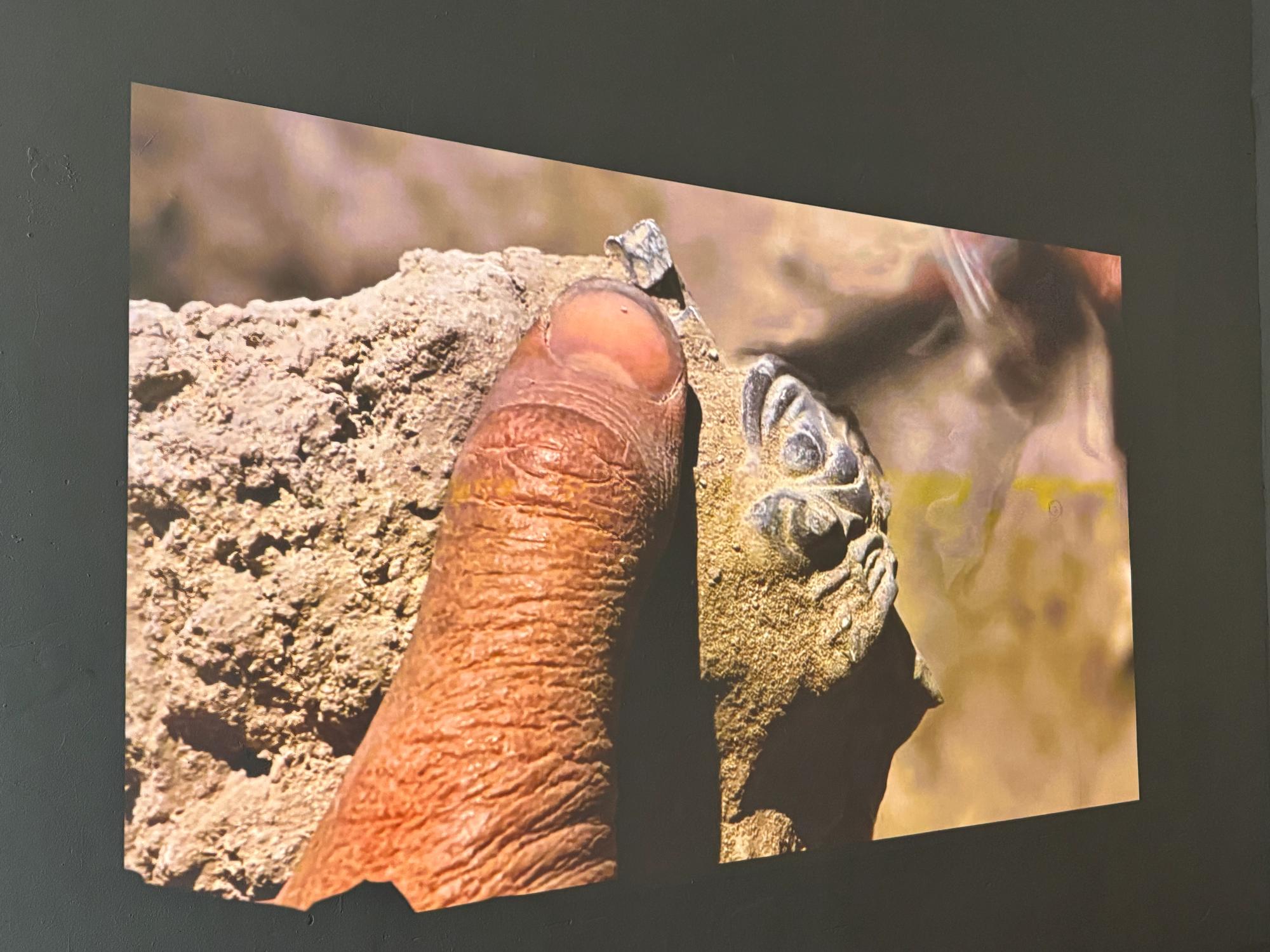
The Exorcist, directed by William Friedkin, 1973. Watched at home for research. Courtesy of Zhejun Gao
The question of whether colonial collections should be returned may invite an immediate moral yes, but moral clarity can also foreclose deeper inquiry. What often gets obscured is procedural complexity in the fullest sense – not just the financial, legal, and political entanglements involved, but the uneven power structures that shape who gets to decide, and on whose terms. Susan Sontag's reflections on viewing images of others' suffering once gave me a similar feeling[1] and helped to name this problem: she observed that the act of bearing witness can itself become a form of satisfaction, a way of feeling that one has responded without having to act. In other words, an ethical response is necessary, yet it can allow us to stop a declaration rather than remain with the harder questions. Not simply, what do we believe, but what forms of action, responsibility, and repair does that belief demand?
I first encountered the field through the objects that dominate media headlines: the Parthenon Marbles, the Benin Bronzes. Their contested status carries clear diplomatic stakes between nations: conditions that make them useful as moral currency, as symbols of historical reckoning. These emblematic cases opened the question of restitution for me, but they also directed my attention towards the thousands of lesser-known artefacts that remain in museum storage. Their removal and displacement are no less real, even if they attract less scrutiny. Perhaps that is because their histories do not fit neatly within the dominant decolonial narratives of the present. If so, asymmetry matters. It suggests that restitution itself may be structured by hierarchies of visibility, value, and legibility that risk producing, rather than undoing, colonial forms of selection.
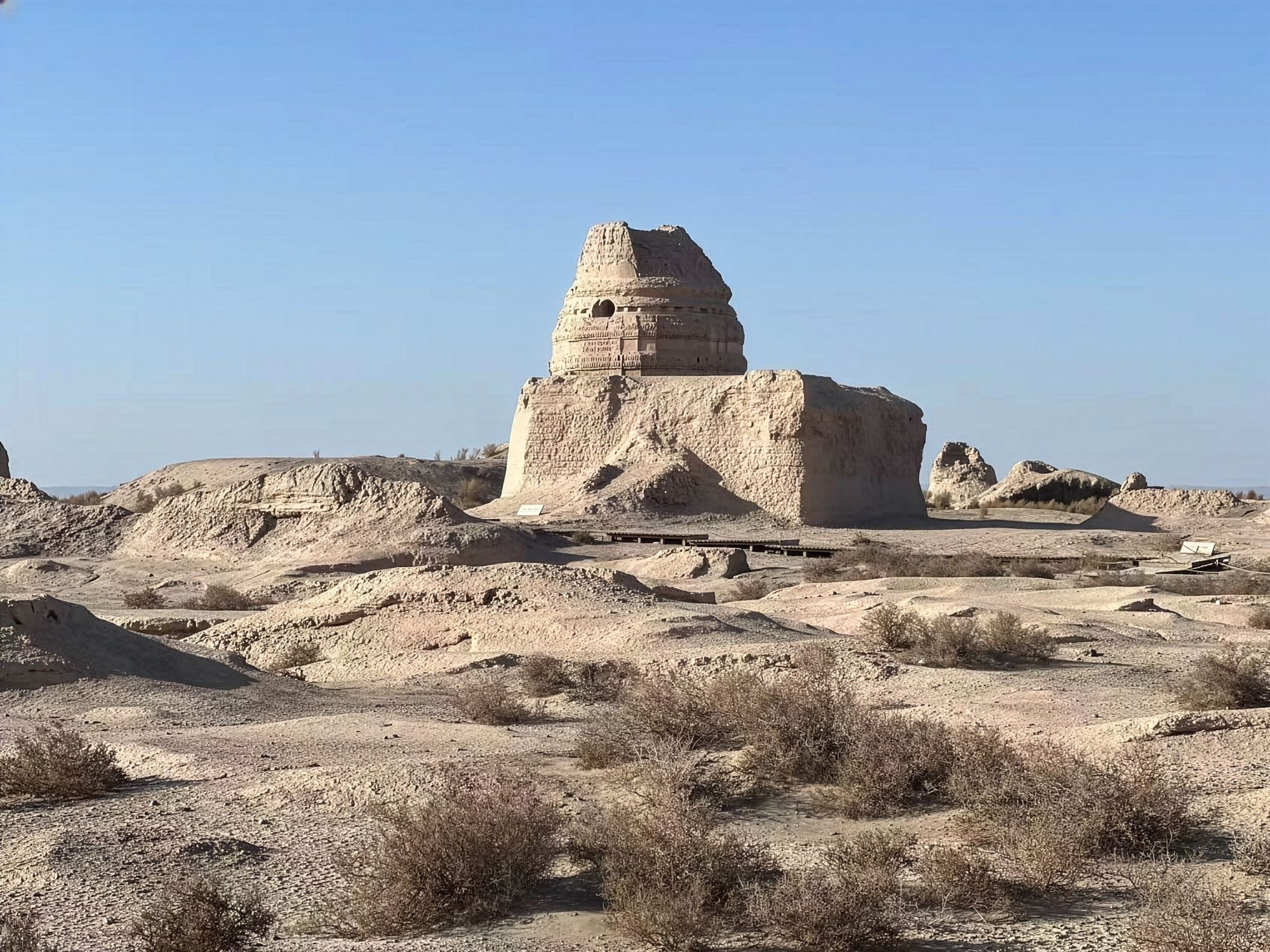
Ruin of an ancient fortress, Dunhuang, China. Photographed during a film shoot in the desert. Courtesy of Beichen Zhang
As I began to locate my research, I found myself turning to the question of how restitution is defined and practised. At its core, the mainstream framework is material-centric, where the transfer of ownership from one party – a state, a community, an individual – to another is treated as its central aim[2]. But physical return is constrained by financial, legal, diplomatic, and institutional pressures, leaving the process in a state of indefinite suspension. Once restitution is understood only as a final transfer, impasse begins to look like inertia. The question becomes: what forms of action remain possible while return is deferred? When there is no clear resolution in sight, what is there to do but wait?
Dan Guthrie's commission Empty Alcove / Rotting Figure at Chisenhale Gallery, the first project I worked on during my fellowship, offered one answer[3]. Guthrie had spent years working with his local council to remove a racist blackboy clock from public display in his hometown, only to be blocked by disputes of ownership. Out of that bureaucratic deadlock emerged a provocation designed to cut through institutional paralysis. What if the object were simply destroyed? Restitution, as it is currently practised, remains a top-down process, which often deepens the opacity of practice and forecloses the participation of individuals. Guthrie's provocation made it clear to me that when institutional mechanisms stall, individual agency may lie in formulating questions that exceed the limits of institutional reason itself.
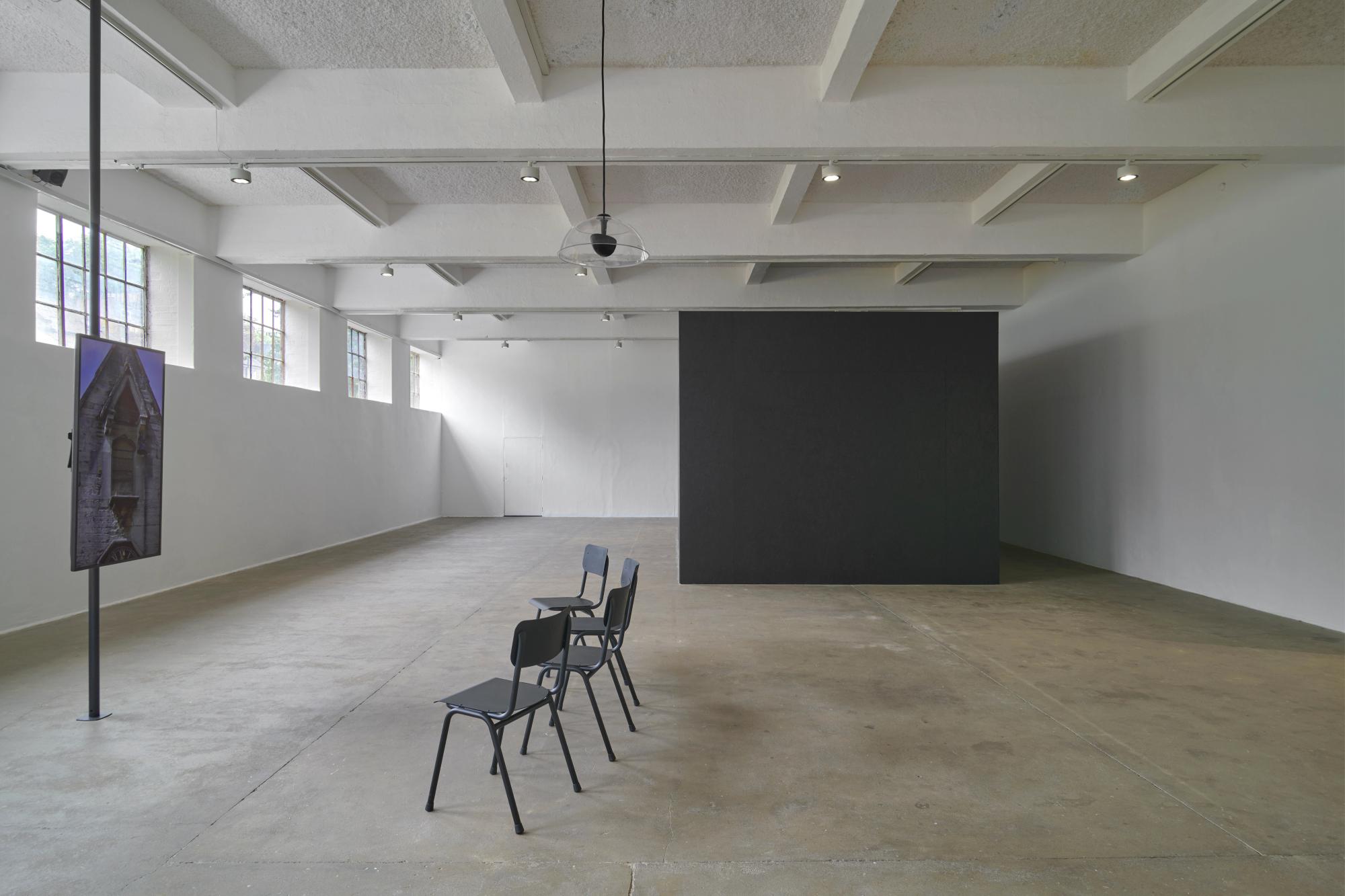
Dan Guthrie, Empty Alcove / Rotting Figure, 2025. Installation view, Chisenhale Gallery, London, 2025. Commissioned and produced by Chisenhale Gallery and Spike Island, Bristol. Photo by Andy Keate. Courtesy of Zhejun Gao
A materialist model of restitution can also obscure other dimensions of an artefact’s significance: use, ritual, spirituality, affect, and the social worlds in which it once operated. Whenever I stand before the protective amulets in the British Museum, what strikes me is not primarily their formal variation across regions and centuries, but the impulse they materialise: the desire for safety, care, and a good life for oneself and for others. That impulse is not culturally singular; it is among the most elemental things human beings share. Yet it is precisely this register that museum systems tend to neutralise through classification, labelling, and display behind glass.
Central to my research, then, is the idea of restitution as a time-based practice of care rather than a discrete event of transfer. This practice extends beyond the physical act of return. Displacement is not only a physical condition but a relational one – an object removed from its community carries with it a severed connection, a rupture in the web of meaning, practice, and memory that once gave it life. Restitution understood as care would seek to repair that rupture, attending to the relationships and forms of knowledge that surrounded an object, and asking what conditions would allow those connections to be restored. This is also why care must be time-based: the work does not end with a handover, but continues in the slow rebuilding of cultural relationships and the ongoing acknowledgement of what displacement has cost.
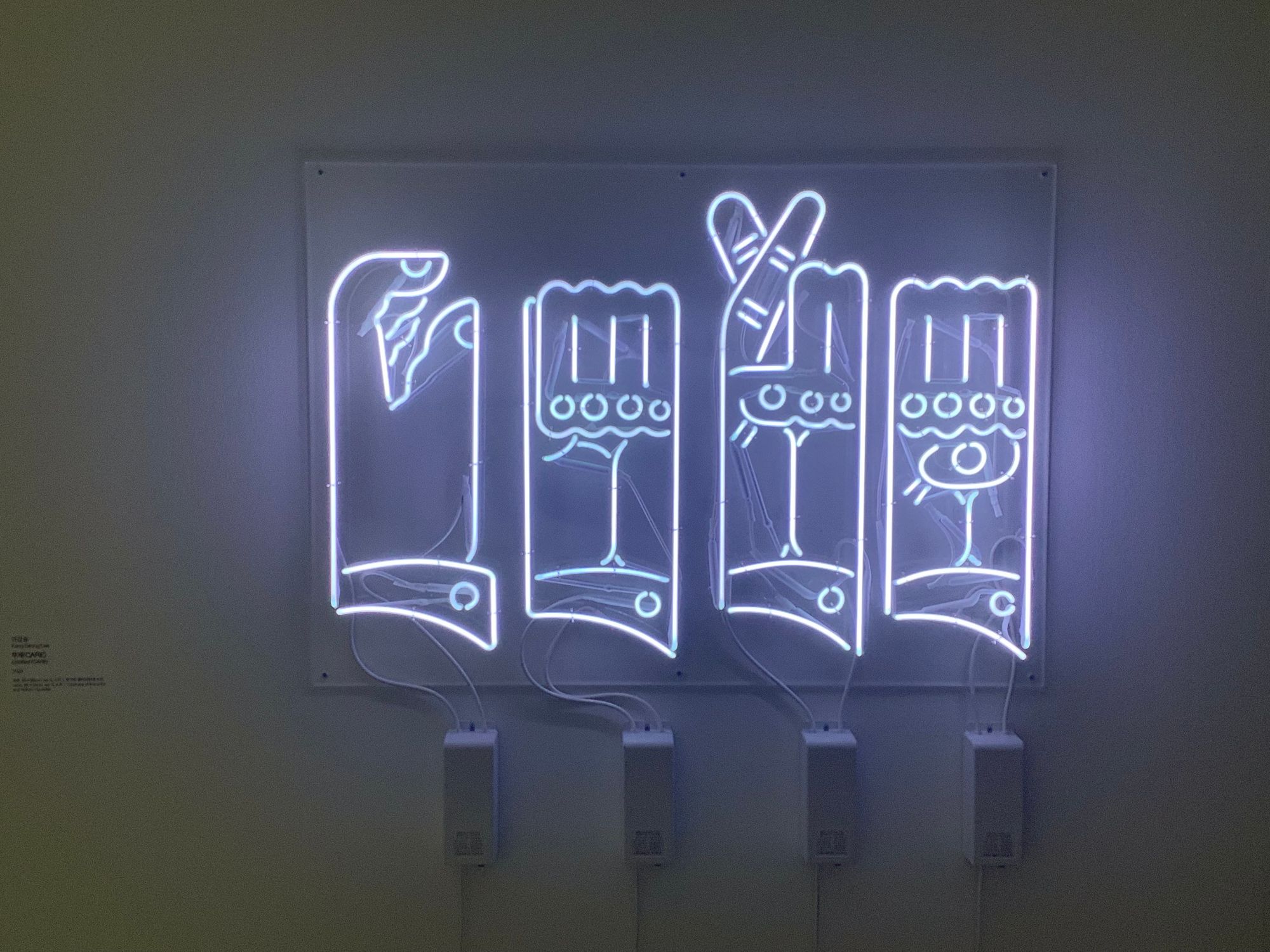
Kang Seung Lee, CARE, 2023. Koren Artist Prize 2023, National Museum of Modern and Contemporary Art, Seoul, 2023. Courtesy of Zhejun Gao
I do not want to treat artefacts as inert matter but as wounded beings – witnesses and vessels of histories of displacement, themselves injured and in need of response and repair. The lives of objects are real, if not animist, then at least conferred: shaped by the communities, practices, and beliefs that made and used them. It is precisely this relational life that the museum's impulse to preserve so often extinguishes – arresting an object at a single moment, stripping it of the ongoing relationships through which its meaning was made, and claiming custody over a fate that was never the institution's to determine. If an object's rightful place is the earth, then moving it from one climate-controlled vitrine to another does not restore it – it merely repeats, in a different register, the original act of removal. From there, a different set of questions emerges: what does a displaced object need? Where, and with whom, does it truly belong? Who bears responsibility for it over time?
Last year, I came across Yarema Malashchuk and Roman Khimei's Explosions Near the Museum (2023) at Frieze, which addressed the looting of cultural objects in the context of Russia’s war against Ukraine. In that moment, something shifted for me: a realisation that restitution is not only a reckoning with the colonial past. Looting did not end with formal decolonisation. It continues in the present, which means the objects requiring return are not a fixed inventory awaiting resolution; they are still accumulating. Furthermore, the displacement of objects and the need for return can occur across multiple contexts, each demanding different methodological and theoretical responses. Climate change, for instance, adds a further layer of urgency and complexity: as rising sea levels and extreme weather threaten to erase the very sites and communities to which objects might be returned, the question of where something belongs becomes increasingly unstable. To frame restitution as postcolonial redress alone is to treat it as a finite problem with a knowable endpoint – limiting not only our understanding of what restitution means, but our capacity to respond to the conditions it must navigate in the present.
Dan Hicks, in The Brutish Museums, calls this the 'Decade of Returns'[4] – but restitution cannot be completed within a decade. It is not a matter of settling historical debts once and for all, then moving on. It names an ongoing condition that binds past violence to present responsibility and future obligation. The question is not whether restitution ends, but how expansively we are willing to reimagine its terms.
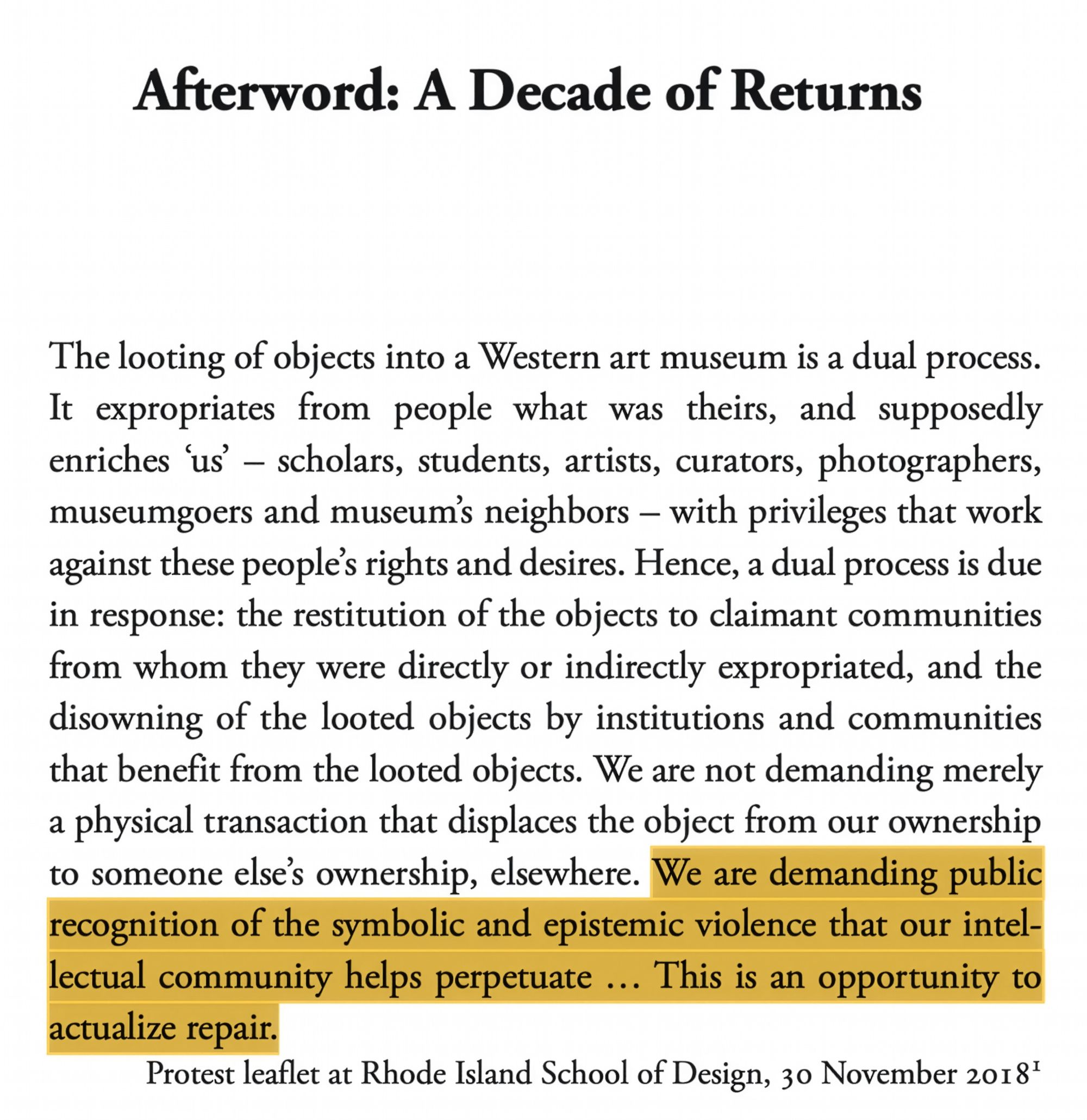
Dan Hicks, The Brutish Museum: The Benin Bronzes, Colonial Violence and Cultural Restitution (London: Pluto Press, 2020). Screenshot taken during reading. Courtesy of Zhejun Gao
Footnotes
[1] Susan Sontag, Regarding the Pain of Others (New York: Farrar, Straus and Giroux, 2003).
[2] ‘About Cultural Restitution’, Returning Heritage, https://www.returningheritage.com/about-cultural-restitution.
[3] Dan Guthrie, interviewed by Olivia Aherne, Chisenhale Gallery, 20 May 2025, https://chisenhale.org.uk/2025/06/06/Dan_Guthrie_Interview.pdf.
[4] Dan Hicks, The Brutish Museums: The Benin Bronzes, Colonial Violence and Cultural Restitution (London: Pluto Press, 2020), pp. 234–242.