The Borderless Shelf: Re-imagining a Library Space2025 Librarians-in-Residence Digital Publication te editions
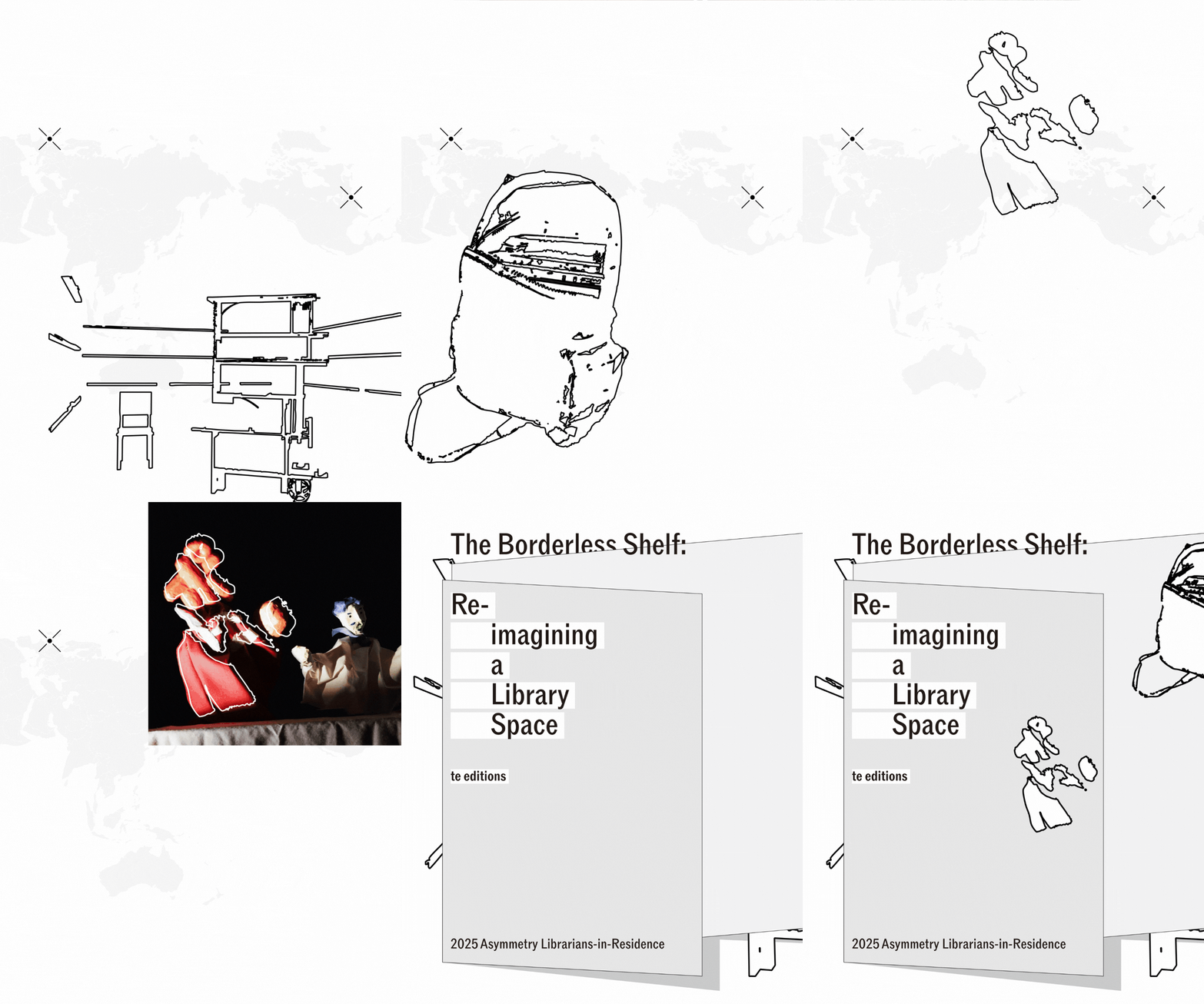
The Borderless Shelf: Re-imagining a Library Space. Graphic design: Sixuan Tong
In the publication shelf documents: art library as practice (2021), artist and writer Laura Larson reflects on how a library practice can produce a ‘transformative communion’ among artists, readers, students, teachers, librarians, and researchers, interweaving these different practitioners and spheres of work within one site. It is a place where we read, listen, and learn how to do things together; hence this site remains fragile and vulnerable.
Initiated under the title The Borderless Shelf: Re-imagining a Library Space, te editions’ three-month residency as our Librarians-in-Residence, from May to July 2025, unfolded across New York City and London, travelling farther and more broadly than we had imagined. This digital publication is both a documentation and a site where the encounters that took place during the residency continue to live, circulate, and hopefully remain transformative.
During this time, we met with reading rooms on both sides of the Atlantic to reflect on how spaces and organisations might hold Asian publications and readerships. We welcomed te editions to London to share their publishing practice together with the magazine’s designer Can Yang and artist Ye Wuji, and hosted writing workshops led by London-based writer Elaine Tam, where we explored translation, displacement, and the fragment, considering slippages in meaning as generative sites of poetic potential, and as ways of engaging questions of diasporic belonging.
Last but not least, the Drifting Backpack initiative brings diasporic, self-organised communities in New York and London together through reading collectively. By scanning and including these self-generated materials alongside the journeys of the backpacks in this publication, we imagine ourselves continuing to hold one another a little closer as texts and images travel.
It rarely feels more urgent to speak about holding space, and about how to remain borderless, given the present moment. Publishing is about finding and creating a public: the friends we speak with, the readers who think alongside us, and the people who carry our work further with them. Throughout this residency we asked where that public – or that community – might exist, or how it might come into being.
By sharing this publication, we hope to encourage reading as a communal event, and the library as a porous site that moves between the singular and transmission, allowing conversations to continue, as reading is about us all.