Three Questions2025 Writer-in-ResidenceLai Fei
In our conversation with Lai Fei, our Writer-in-Residence, she traces the evolving questions guiding her research in London, the role of form in approaching complex narratives, and the personal processes through which she, as a writer, comes to find her voice.
Asymmetry: Our residency aims to allow time for slow research and reflection, both essential for writing. What new questions or ideas are emerging for you as you work here in London?
Fei: As I write in both English and Chinese for different audiences, I've always struggled with the discrepancies and divergence in my communication across different channels. The presence of restrictions and taboo was so ingrained in the context of all my work in China that I felt almost directionless when those constraints seemed to vanish as I started working here in London. Questions that felt urgent or intriguing in China often failed to resonate here, and vice versa.
Yet gaining distance from my native environment has given me a clearer perspective on the stories I am uniquely positioned to tell, and the ones I feel most intimately connected to. As I research deeper into the history of queer life in contemporary China, the political erasure and collective avoidance surrounding queer activities in the pre-Internet era incites a sense of urgency for me to document this history, before it’s forgotten by all who have been there.
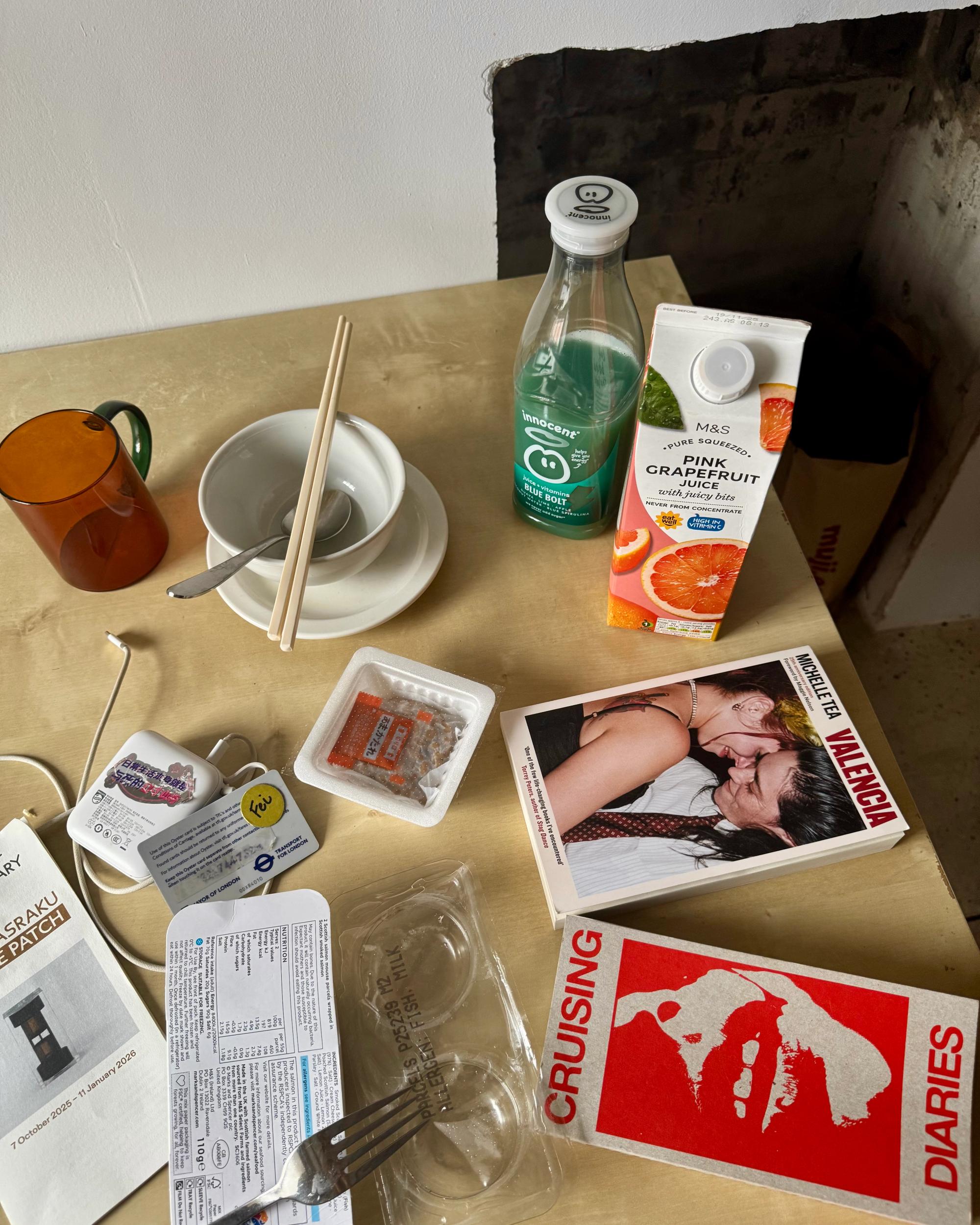
A writer's desk (the London international student '留子' version). Courtesy of Lai Fei
Asymmetry: Your research project engages with urban parks as queer commons and could move across forms: essay, auto-fiction, maps, and walking as method. How do you arrive at which form a piece of writing wants to take?
Fei: Form is something I am hyper-conscious of as a working art critic, and I cringe whenever I can sense that form overshadows authentic voice in a text, particularly in curatorial writing that aims to check boxes and self-proliferates these days. For the purpose of my project regarding queer life in public spaces, the form my writing takes is completely contingent on the specific stories I want to tell and the ways I can do so without exposing, hurting or exploiting anyone implicated in the stories.
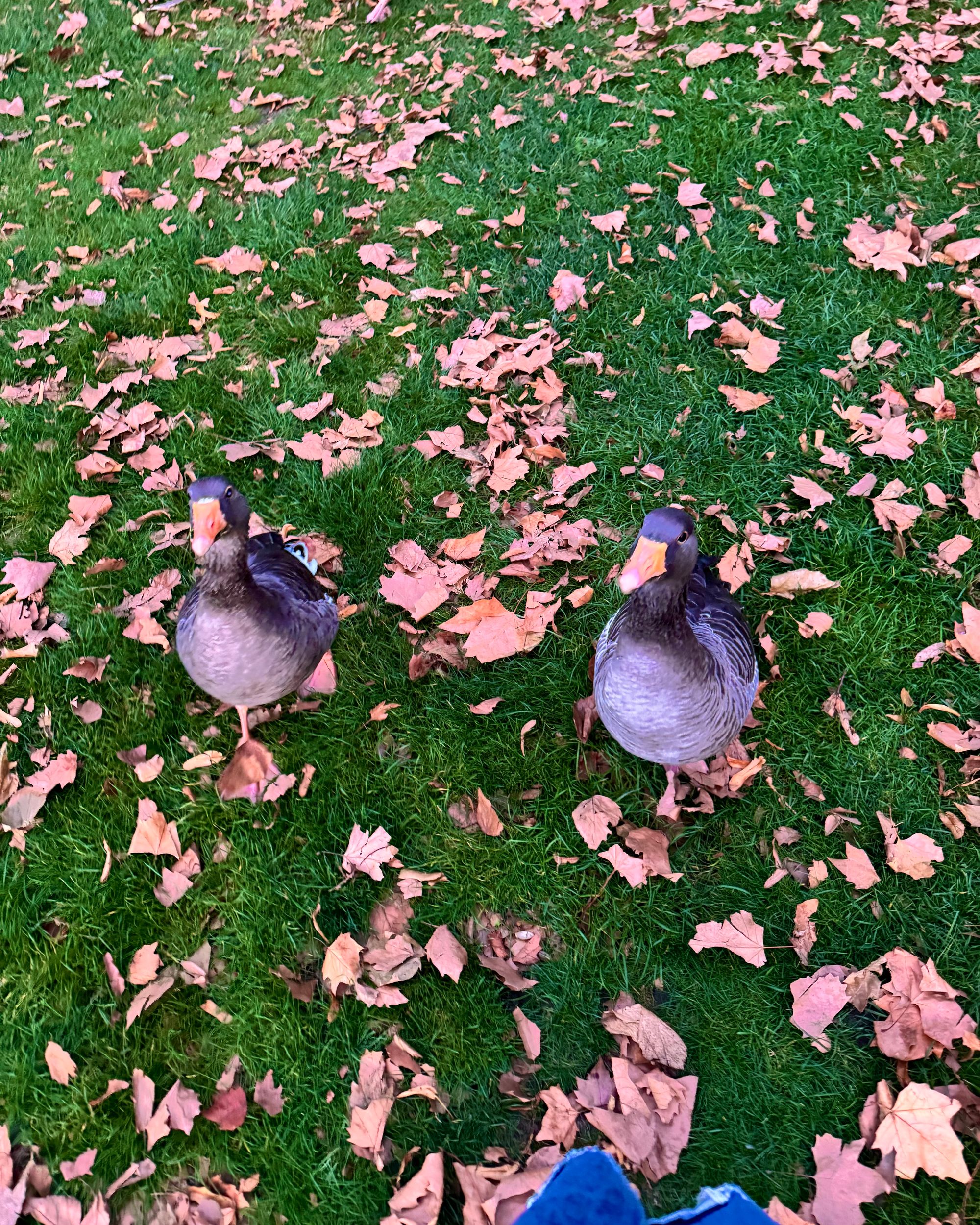
Walking as a method, St. James's Park. Courtesy of Lai Fei
Asymmetry: For emerging writers who are finding their voice, what has helped you trust your own direction? Are there forms of support, community, or guidance that were or are meaningful to you?
Fei: Learning to trust my internal compass is an ongoing process, with a fluttering level of self-doubt along the way. Writing, in my experience, is an intensely solitary endeavour – perhaps the loneliest task one can undertake. That said, I can’t offer much insight in the realm of group support, as my own struggles have always been navigated alone. The pressure can become overwhelming, especially when one’s standards and taste constantly exceed one’s output. But writing is the means, not the end.
In terms of voice, it’s been helpful for me to experiment with the second person narrative as an exercise – telling a story as if addressing a letter to ‘you’, who can be anonymous or completely fictional. This approach is partly inspired by Ali Smith – a writer I encountered in my early adolescence who left a lasting impact. What’s interesting about writing is that imitation takes place subtly in your own language as you keep on reading. Voice nurtures voice. Any writer can build their own imaginary community and find ‘guidance’ in pre-existing works. But make sure to avoid absorbing the bad stuff that irks you.
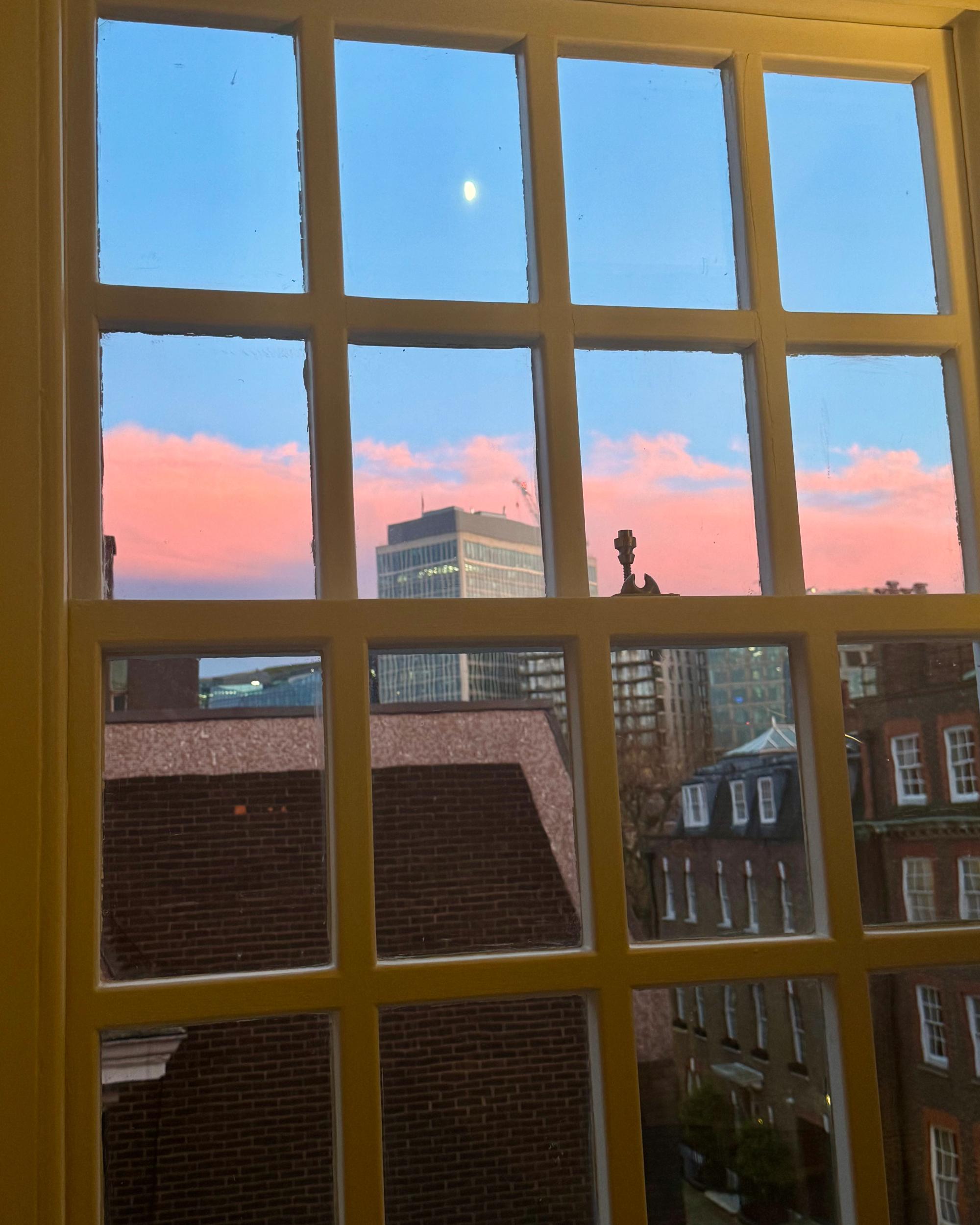
A writer's room with a view. Courtesy of Lai Fei